Comprehensive Library of Software, Calculators & Technical Knowledge
Access advanced engineering software, professional calculators, and in-depth technical articles. Everything you need for pressure vessels, steel structures, and process equipment design.
Specialized Engineering software with video demonstrations

Comprehensive silo design and analysis tool with 3D visualization. Handles bulk material properties, flow patterns, structural calculations, and foundation design.

Calculate stresses in cylindrical and spherical shells at nozzle junctions per WRC Bulletin 537/107. Handles external loadings and reinforcement pad analysis.
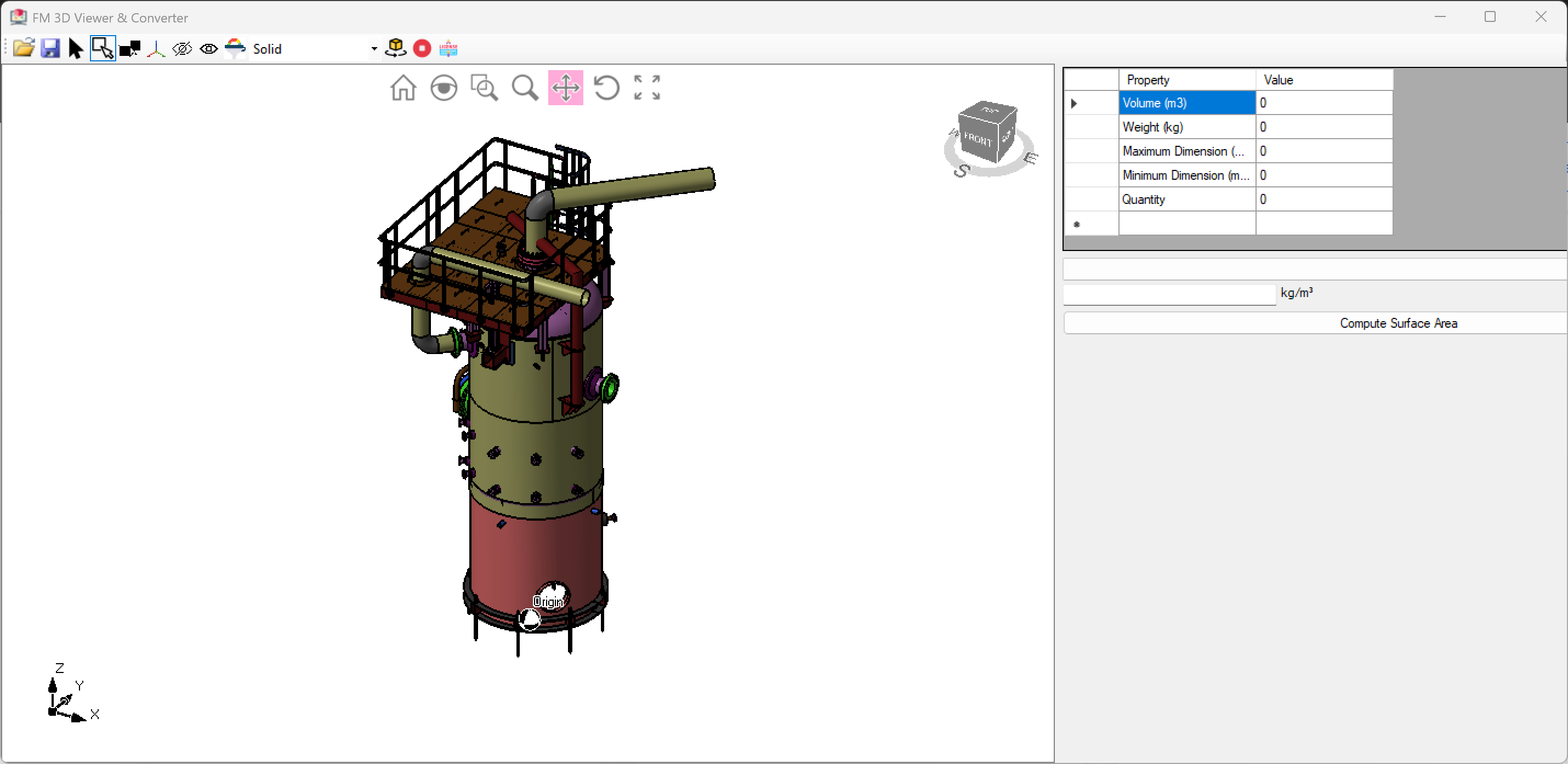
Windows application for viewing and converting 3D files. Calculate volumes, weights, surface areas with material density database and measurement tools.
Specialized Engineering Calculators

Standards dimensions and properties for more than 25000+ Structural Steel Sections (Profiles) from various countries.

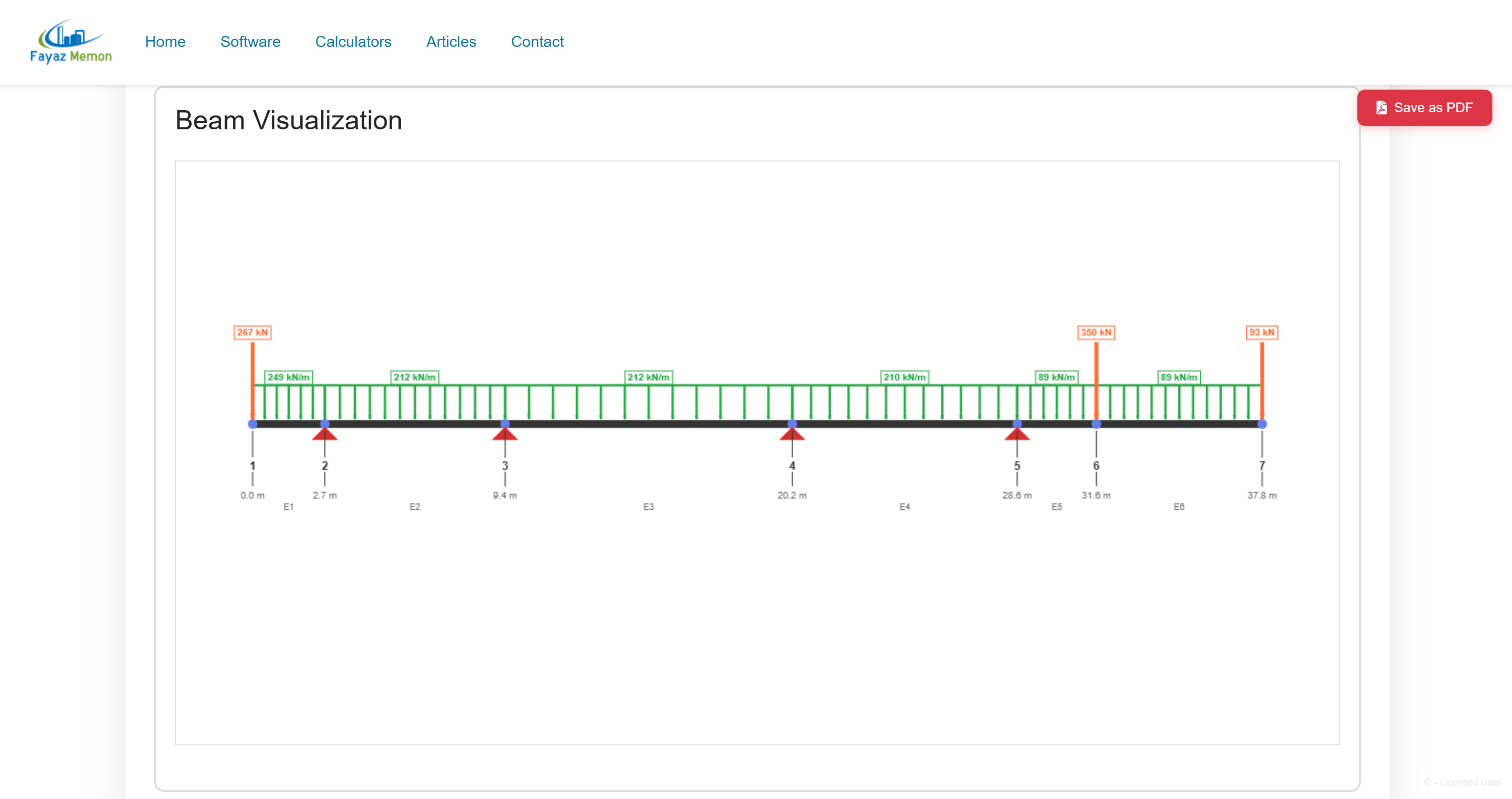
Structural Engineering Tool using Finite Element Method (FEM) for analyzing beams with point loads, distributed loads, and multiple support types.

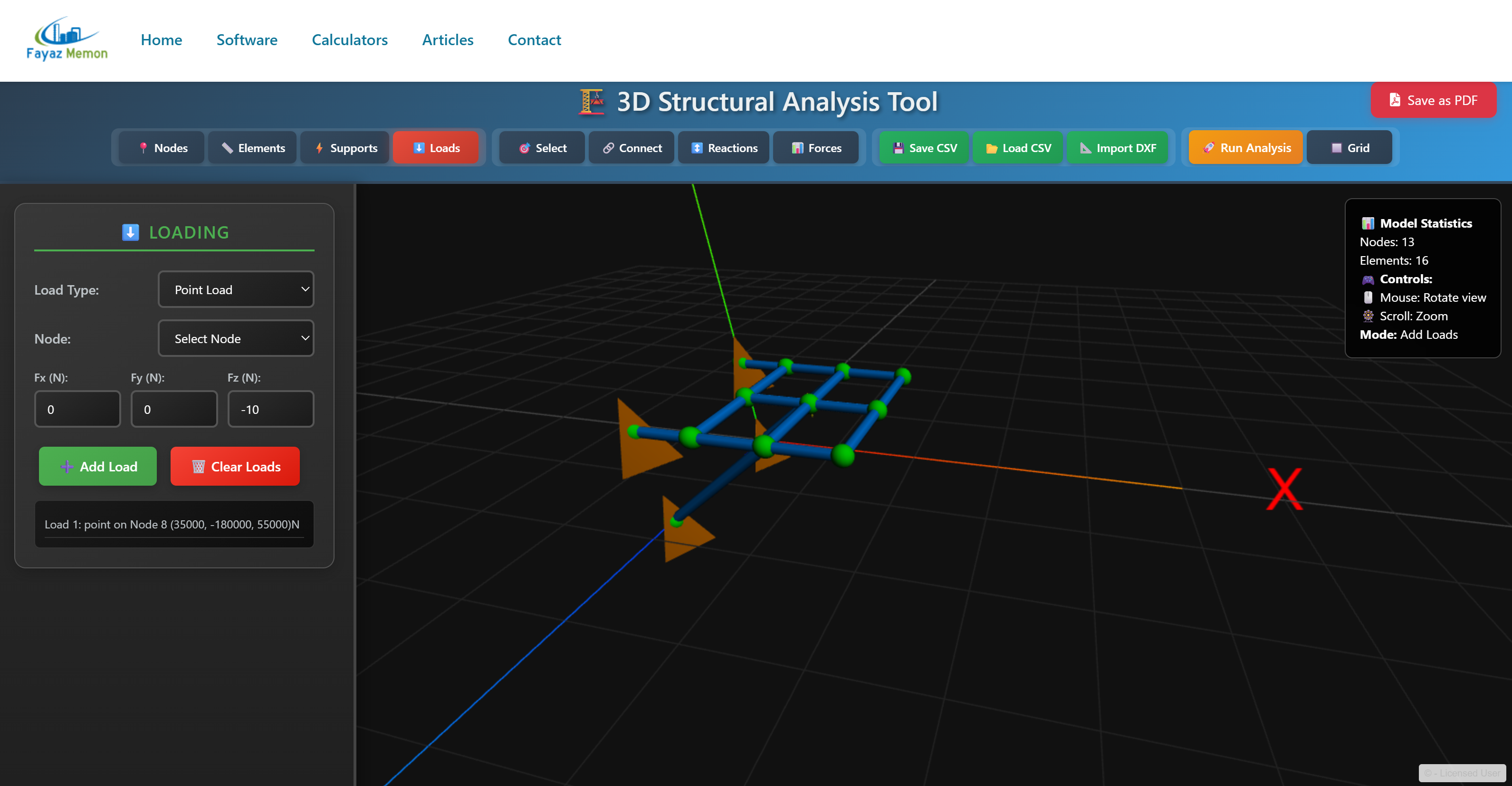
3D structural analysis tool provides comprehensive finite element analysis capabilities for engineers, architects, and students through an intuitive web-based interface.

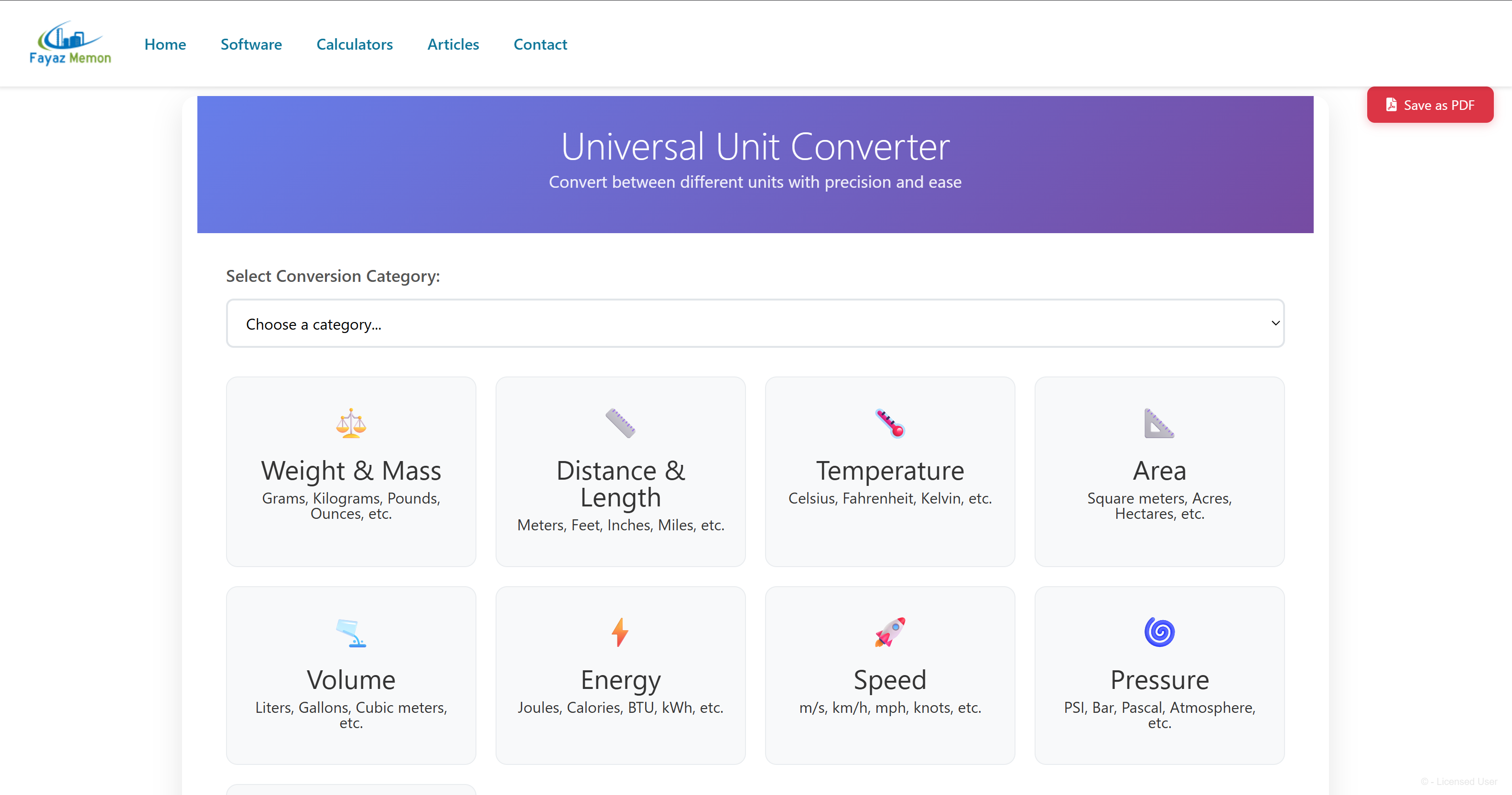
Convert between 150+ units across 18 categories including weight & mass, distance & length, temperature, area, volume, energy, speed & velocity, pressure, force, acceleration, angle, data storage, density, flow rate, light intensity, power, time, and torque with instant precision.

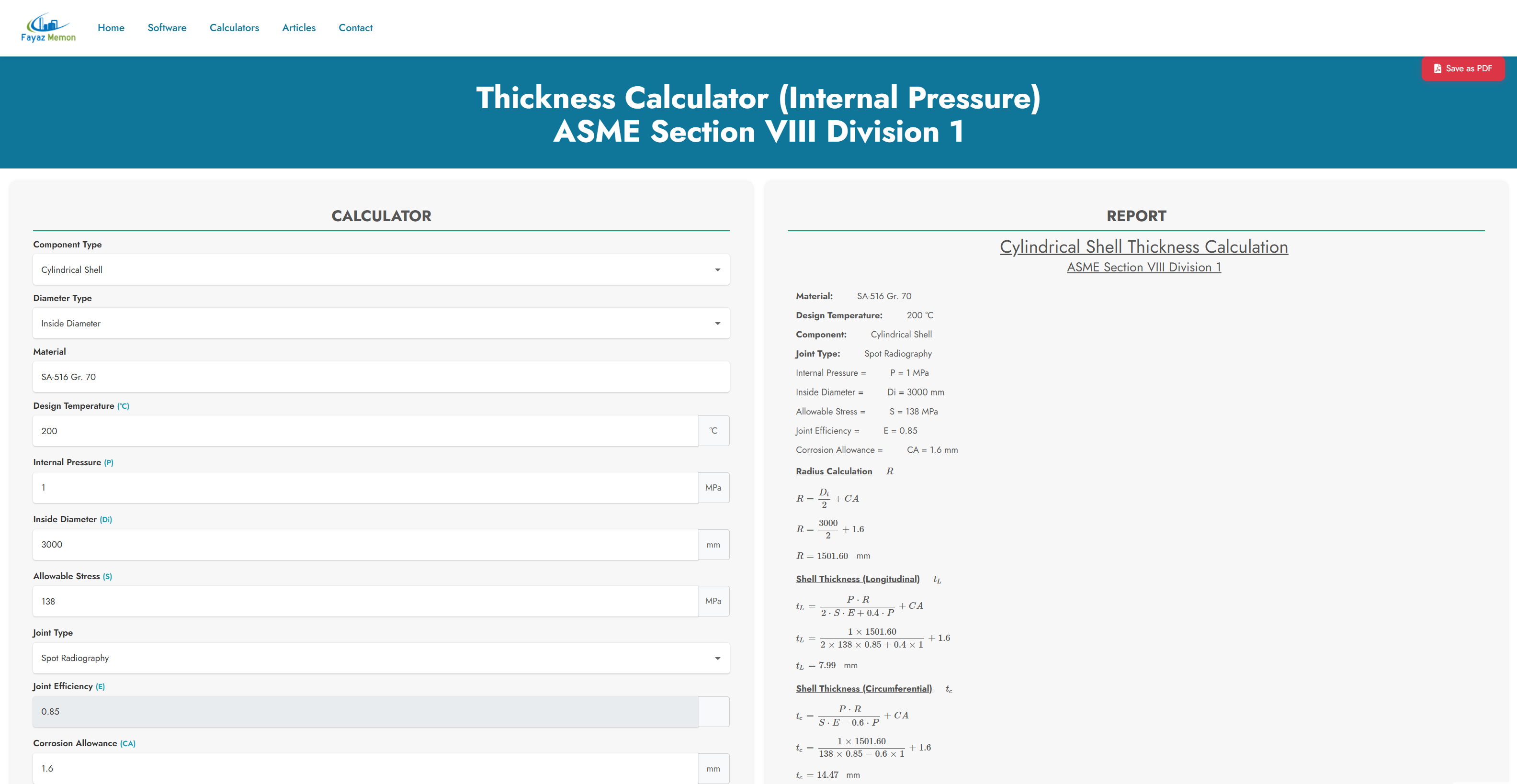
Calculate minimum required thickness for cylindrical shells, spherical shells, and formed heads under internal pressure according to ASME Section VIII Division 1.

Evaluate PWHT requirements based on material type and thickness according to ASME Section VIII Division 1.

Fatigue assessment screening criteria to determine if detailed fatigue analysis is required for cyclic loading conditions.
In-depth engineering insights, tutorials, and best practices
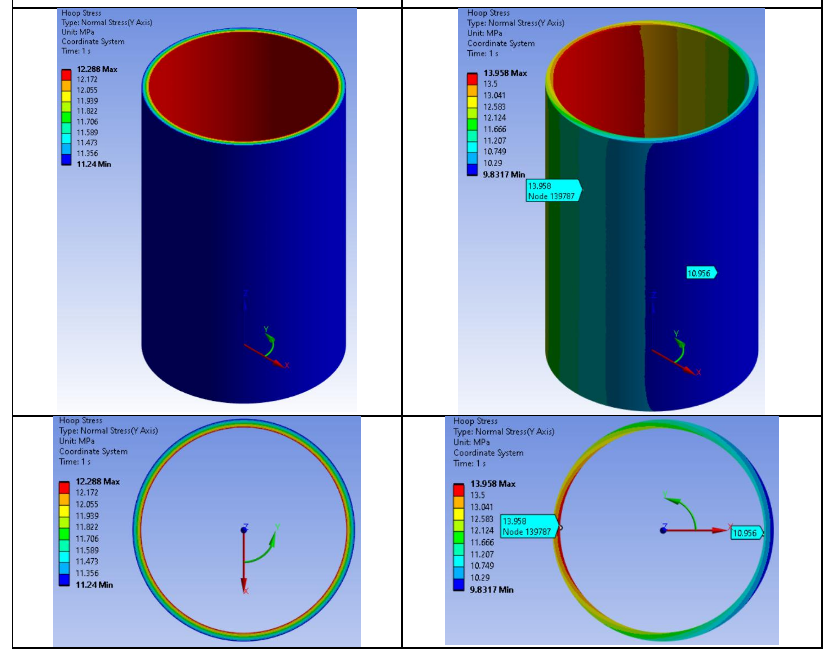
A comprehensive guide examining the critical decision between using nominal vs. minimum wall thickness in nozzle-to-shell junction analysis. Learn how this 12.5% difference impacts stress results, ASME code compliance, and vessel safety with detailed WRC 537/297 perspectives and practical examples.
Essential reading for pressure vessel engineers working with nozzle connections and stress analysis